
Quick Review Old Lecture Slides Efficiently
Oct 28, 2026 · 7 min read · The Quizard Team

To quickly review old lecture slides efficiently, focus on active recall through self-testing with generated questions and strategically spaced repetition. These methods are more effective than passive re-reading, helping you pinpoint knowledge gaps and commit information to long-term memory.
The Inefficiency of Passive Re-Reading
Many students default to re-reading their lecture slides when it's time to review. While it feels productive, simply re-reading is a passive study method that often leads to an illusion of competence. You recognize the information, but that doesn't mean you can recall it or apply it under exam conditions. This approach is inefficient because it doesn't challenge your memory and doesn't expose what you actually know versus what you merely remember seeing. For effective review, you need to actively retrieve information.
Active Recall: Asking and Answering Questions
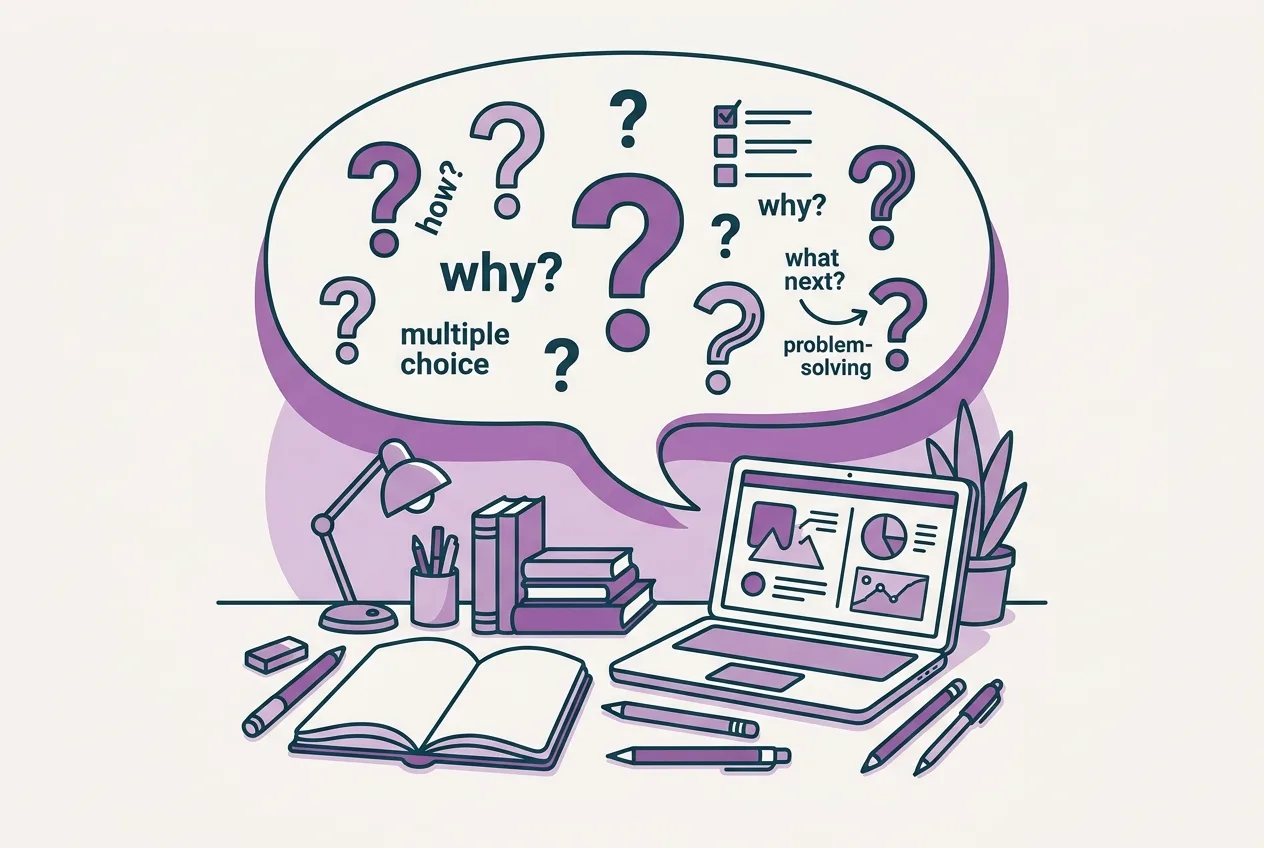
Active recall is the process of retrieving information directly from your memory, rather than just passively receiving it. When you actively recall, you strengthen the neural pathways associated with that information, making it easier to remember in the future. The most direct way to implement active recall for lecture slides is by turning the content into questions.
Instead of passively reading a slide on a particular concept, ask yourself:
- "What are the key definitions on this slide?"
- "How does this process work?"
- "What are the implications of this theory?"
- "Can I explain this concept in my own words without looking at the slide?"
You can generate these questions manually as you go through your slides or notes, a method known as the Cornell Note-Taking System where you create cues or questions in the margin. Alternatively, tools can automatically generate questions directly from your lecture slides or notes, turning passive content into active learning prompts. For example, Quizard can analyze your uploaded slides and create exam-style questions linked directly to the specific slide they came from, allowing for quick reference and targeted review. This ensures every question challenges you on content you've actually covered.
Spaced Repetition: Optimizing Your Memory Schedule
Once you've generated questions, the next step for efficient review is to integrate them into a spaced repetition schedule. Spaced repetition is an evidence-based learning technique that involves reviewing information at increasing intervals over time. The idea is to challenge your memory just as you're about to forget something, which strengthens the memory trace more effectively than reviewing too often or too rarely.
Here's how to implement it:
- Initial Review: After learning new material, review it within 24 hours.
- First Spacing: Review the material again after a few days (e.g., 3 days).
- Second Spacing: Extend the interval further (e.g., 7-10 days).
- Subsequent Spacing: Continue to increase the intervals as long as you're successfully recalling the information. If you struggle with a concept, review it sooner.
Manually managing a spaced repetition schedule for numerous lecture slides and topics can be complex. Digital tools are highly effective for this. Many flashcard apps and study platforms incorporate spaced repetition algorithms that automatically schedule your reviews based on your performance. Quizard, for instance, builds a daily review session tailored to your learning progress, ensuring you practice the right material at the right time. This automated scheduling frees you to focus on learning rather than managing a complex calendar.
You can learn more about scheduling your study with this Spaced Repetition Schedule for Exams: Your 4-Week Plan.
Strategic Review Sessions for Maximum Impact
Efficient review isn't just about what you study, but also how you structure your sessions.
Prioritize and Target Weaknesses
Use a coverage map or similar system to identify which slides or topics you haven't reviewed sufficiently or where you consistently struggle. Don't waste time re-reviewing content you already know well. Focus your energy on areas that need improvement. When using a tool that links questions to slides, you can quickly see which parts of your lectures require more attention.
Integrate New and Old Material
As new lectures accumulate, don't abandon older material. Your review schedule should incorporate a mix of recent and older topics. This keeps prior knowledge fresh while you learn new concepts. A well-designed spaced repetition system will naturally weave in older material at increasing intervals.
Short, Focused Bursts
Instead of marathon cramming sessions, opt for shorter, more frequent review periods. For example, use the Pomodoro Technique to study for 25 minutes, followed by a 5-minute break. This approach maintains focus, reduces burnout, and allows for consistent exposure to the material without overwhelming your cognitive load.
Beyond Questions: Flashcards and Summaries
While questions are excellent for active recall, flashcards serve a similar purpose, especially for definitions, key terms, or short concepts. Like questions, flashcards force you to retrieve information from memory before revealing the answer.
Creating Flashcards Efficiently
You can create flashcards manually, writing questions or terms on one side and answers or definitions on the other. Alternatively, many study platforms can generate flashcards automatically from your lecture slides, notes, or even existing questions. This significantly speeds up the creation process.
Concise Summaries
Before diving into questions or flashcards, a quick skim of a slide to mentally summarize its main points can also be a form of active recall. Try to articulate the core message of a slide without looking at your notes, then check for accuracy. This can help structure your understanding before drilling down into details with questions.
Leveraging Technology for Seamless Review
Modern study tools are designed to streamline the process of reviewing old lecture slides efficiently. These tools can:
- Generate Practice Questions: Automatically create a diverse set of questions from your uploaded slides, saving you hours of manual work.
- Create Flashcards: Convert key information into digital flashcards, often incorporating spaced repetition features.
- Track Progress: Monitor your performance on questions and identify areas where you need more practice.
- Schedule Reviews: Implement spaced repetition algorithms to ensure you review material at optimal intervals.
- Link Content: Directly link questions and flashcards back to the original source slide, allowing for immediate clarification and context. This is particularly useful when you need to quickly refresh your memory on a specific detail.
Quizard provides these features by generating questions and flashcards directly from your lecture slides, linking them to their original source, and scheduling them for review using spaced repetition. This integrated approach ensures your review process is both active and efficient, giving you more time to understand and less time to manage.
FAQ
How can I avoid just passively re-reading my slides?
To avoid passive re-reading, transform your study sessions into active recall exercises. Instead of just reading, generate questions from each slide or section and try to answer them from memory. Use flashcards for key terms, or try to explain concepts aloud without looking at your notes.
What if I don't have time to make questions for every slide?
If time is limited, prioritize creating questions for the most important concepts, those you find challenging, or areas frequently emphasized by your professor. Alternatively, use a study tool that can automatically generate questions from your lecture slides to save significant time.
How often should I review old lecture slides?
The optimal frequency for reviewing old lecture slides depends on the material's difficulty and your familiarity with it. Spaced repetition systems suggest reviewing new information within 24 hours, then progressively extending intervals (e.g., 3 days, 1 week, 2 weeks, 1 month). Digital tools can manage this schedule for you.
Quizard turns your own lecture slides into questions that cite the slide.
Start free